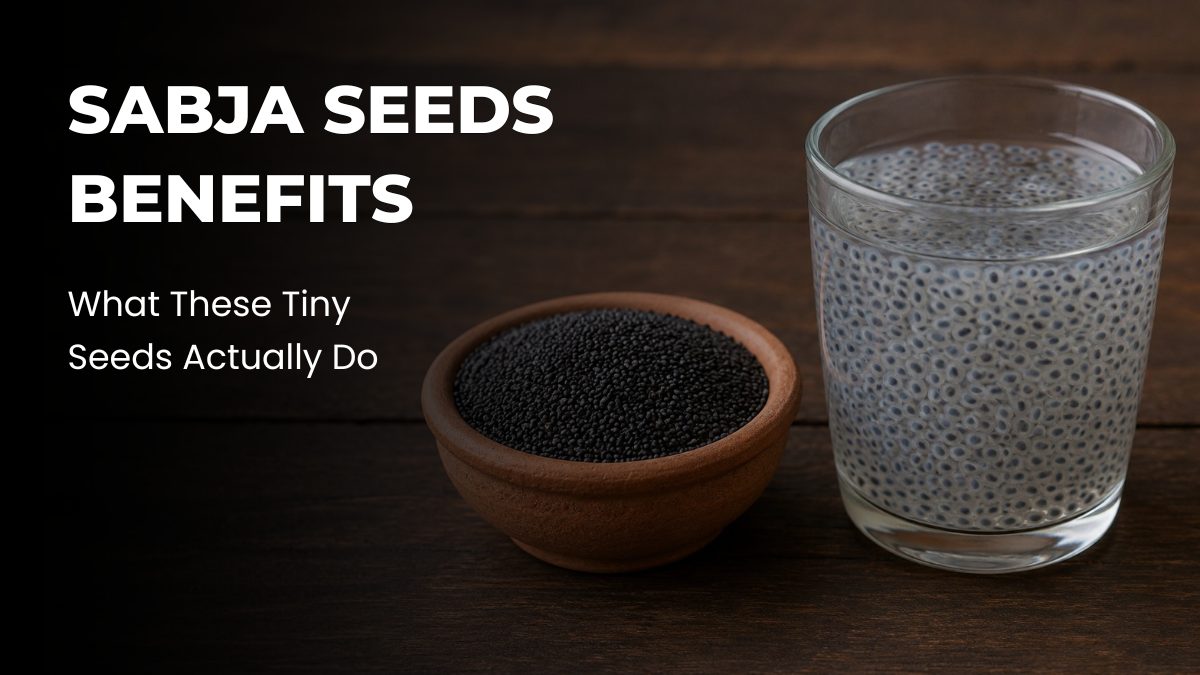
Sabja Seeds Benefits: What These Tiny Seeds Actually Do
Drop two teaspoons of sabja seeds into a glass of water. Within five minutes, each tiny black seed swells to roughly 45 times its original size, surrounded by a clear gel coating …
Tips, guides and stories to help you live more sustainably — curated by our team of wellness experts.
Drop two teaspoons of sabja seeds into a glass of water. Within five minutes, each tiny black seed swells to roughly 45 times its original size, surrounded by a clear gel coating …
Bihar's farmers have been drinking sattu before a day's work in 40-degree heat for centuries. No blender, no refrigeration, no ₹3,000 tub with a shaker bottle. Just roasted gram flour stirred into …
Pick up almost any personal care or food product in India and you will find at least one of these words on the label: Natural. Herbal. Chemical-free. Pure. Eco-friendly. Toxin-free. Here is …
Flax seeds — called alsi in Hindi — have been used in Indian kitchens for centuries. You find them in traditional laddus, chikkis, and chutneys across North and Central India. Today they …
Your grandmother probably made jowar roti without thinking twice about it. It was just what people in Maharashtra, Karnataka, Andhra Pradesh, and Telangana ate — sometimes three times a day. Then wheat …
Kalonji sits in most Indian spice boxes. You see it on naan bread, in pickles, in dal tadka. It looks unremarkable — tiny black seeds with a faintly bitter, peppery flavour. Most …
Spirulina has been called a superfood so many times the word has lost meaning. Green powder, big claims, expensive packets. Before you add it to your morning smoothie every day, it helps …
In most Indian homes a generation ago, there was a copper matka or copper vessel on the kitchen shelf. Water sat in it overnight. You drank from it in the morning. Nobody …
Walk into any Indian pharmacy, supermarket, or wellness store and the neem shelf is always full. Soaps, oils, capsules, shampoos, powders, face washes — every brand has a neem product. Most of …
Every June, the same things happen across India. The rains arrive. The heat breaks. And then, within two weeks, half the office has a cold. Someone has dengue. The local clinic has …