
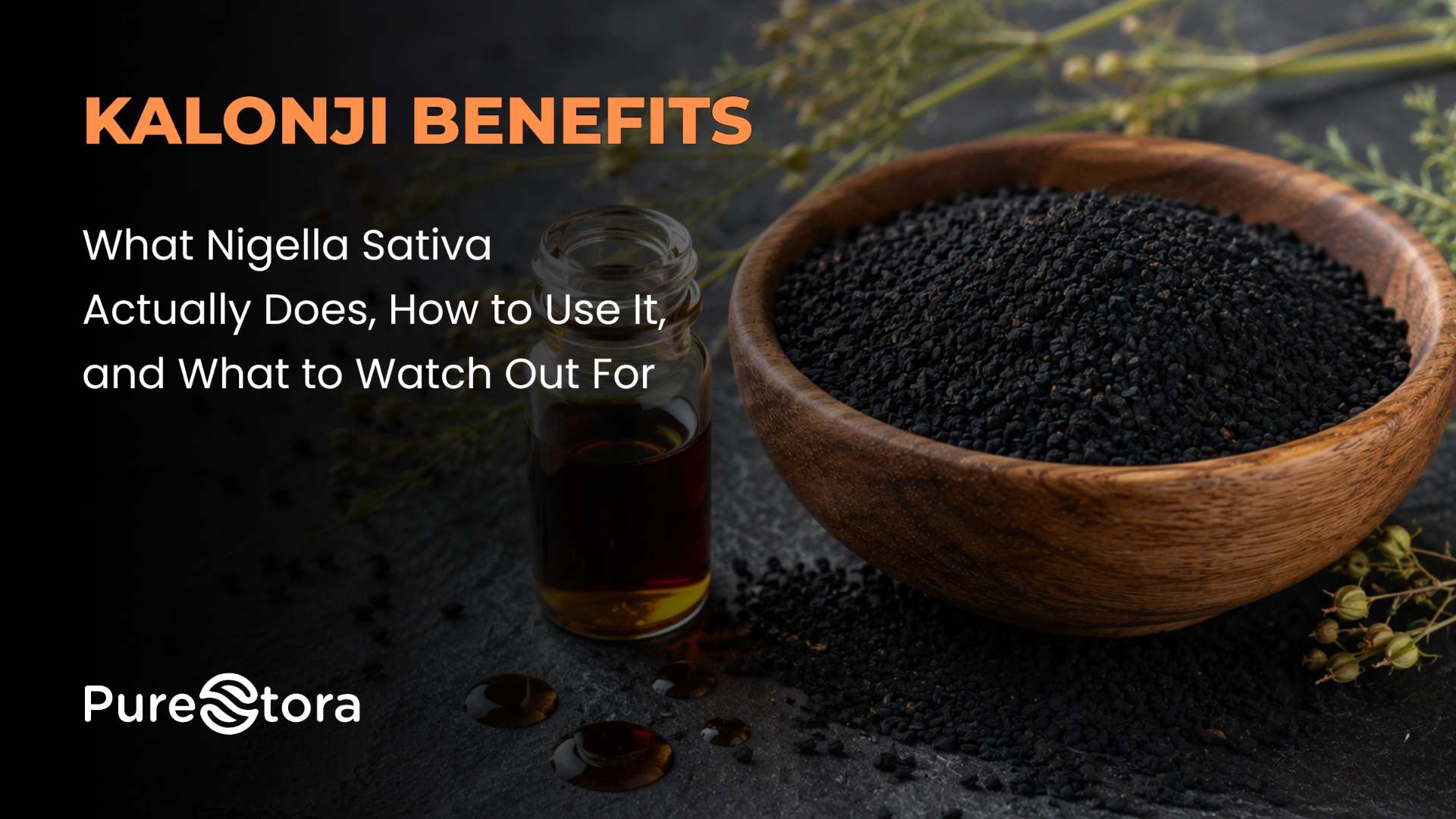
Kalonji sits in most Indian spice boxes. You see it on naan bread, in pickles, in dal tadka. It looks unremarkable — tiny black seeds with a faintly bitter, peppery flavour. Most people use it only as a spice without knowing that it has one of the most extensively studied medicinal profiles of any herb used in Indian kitchens.
Known scientifically as Nigella sativa, kalonji is called Habbatus Sauda or "the blessed seed" in Islamic tradition and Krishna Jeeraka in Ayurvedic texts. In India it sits at the intersection of two of our oldest medicine systems — Ayurveda and Unani — both of which have used it for over 2,000 years for everything from digestive complaints to respiratory health. The Unani Pharmacopoeia of India, Ministry of AYUSH formally lists kalonji as a standard medicinal ingredient, one of 298 single drugs with documented standards for quality and use.
Modern research is now backing much of what traditional medicine claimed. Here is what it actually shows.
What Makes Kalonji Work — Thymoquinone
Kalonji contains over 100 biologically active compounds, but the one most responsible for its medicinal properties is thymoquinone (TQ). Thymoquinone is a phytochemical found in the essential oil of kalonji seeds — it gives the seeds their characteristic sharp, slightly medicinal smell and taste. Most of the benefits attributed to kalonji in research trace back to thymoquinone's anti-inflammatory, antioxidant, and antimicrobial activity.
This is important to understand because it explains why cold-pressed kalonji oil — which concentrates the essential oil — is more potent than whole seeds for most medicinal purposes, while whole seeds are better suited for culinary and digestive use.
What the Research Actually Shows — Benefit by Benefit
Blood sugar and cholesterol — strongest evidence
This is where kalonji's research base is most consistent. A comprehensive overview of 20 systematic reviews and meta-analyses published in Frontiers in Nutrition (PMC, 2023) found that Nigella sativa significantly reduced fasting blood glucose, HbA1c, total cholesterol, LDL cholesterol, and triglycerides across multiple randomised controlled trials — with effects most pronounced in people with type 2 diabetes and metabolic syndrome. Blood pressure reduction was also consistently observed across the included studies.
The honest caveat from this same overview: most of the underlying studies were small and short-term, and the overall quality of evidence was rated low to very low under the GRADE system. The direction of effect is consistently positive — but larger, longer trials are still needed. Kalonji is not a replacement for diabetes medication, but research suggests it may be a useful daily addition for people managing blood sugar and cholesterol.
Anti-inflammatory and antioxidant effects
Thymoquinone is a potent antioxidant that works by neutralising free radicals and reducing inflammatory markers including CRP (C-reactive protein) and TNF-alpha. Multiple meta-analyses have confirmed significant reductions in inflammatory biomarkers with kalonji supplementation. This anti-inflammatory action is likely the mechanism behind many of kalonji's other benefits — from respiratory health to digestive comfort.
Respiratory health
Both Ayurveda and Unani traditionally used kalonji for breathing complaints. Research supports this — studies show kalonji supplementation improved asthma control test scores and forced expiratory volume in asthma patients. Nigellone, a compound in kalonji, has documented antihistamine properties that help reduce allergic respiratory responses. For seasonal allergies and mild asthma, kalonji oil is one of the more evidence-supported natural supports available.
Digestive health
Kalonji has documented carminative and digestive enzyme-stimulating properties. In traditional Indian medicine, whole kalonji seeds in food — on naan, in pickles, in dal — served the same function as ajwain (carom seeds): reducing bloating, stimulating gastric acid production, and improving gut motility. This is not just folklore. The seeds' thymoquinone content has demonstrated protective effects on the gut lining in research settings.
Liver health
Research suggests kalonji supplementation improves liver enzyme markers (ALT, AST) in people with non-alcoholic fatty liver disease — a condition affecting a growing proportion of urban Indians due to high-carbohydrate diets and sedentary lifestyles. The hepatoprotective effect appears to come from thymoquinone's antioxidant action protecting liver cells from oxidative damage.
Kalonji Oil Benefits for Hair
This is the rising search angle and the one with the most Indian cultural resonance. Hair oiling — champi — is part of Indian grooming tradition across generations. Kalonji oil is now being added to hair oil blends for two specific reasons backed by research:
Scalp inflammation and follicle health — Many cases of hair thinning in India — particularly diffuse hair loss in women — are linked to scalp inflammation. Thymoquinone's anti-inflammatory action helps reduce follicular inflammation, one of the documented causes of hair follicle miniaturisation and thinning. Kalonji oil applied directly to the scalp targets this mechanism.
Antifungal action on the scalp — Similar to neem, kalonji oil has documented antifungal properties. For dandruff caused by Malassezia yeast, kalonji oil used as a pre-wash scalp treatment addresses both the fungal and inflammatory components simultaneously.
How to use it for hair: Mix 5–10 drops of cold-pressed kalonji oil with a carrier oil (coconut or sesame), massage into the scalp, leave for 30–60 minutes, wash out. Use 2–3 times per week. Do not use undiluted — kalonji oil is potent and can cause irritation on sensitive scalps.
How to Use Kalonji Daily — Practical Indian Methods
As seeds in food: The simplest and most sustainable method. Add a pinch (half a teaspoon) to dal, sabzi, raita, or roti dough. This is the traditional culinary use and delivers modest daily amounts of thymoquinone alongside the digestion-supporting benefits of the seeds.
As kalonji oil internally: Half a teaspoon of cold-pressed kalonji oil daily, taken directly or mixed into warm water with honey. This is the concentrated form and how most of the research is conducted. The oil has a strong, pungent, slightly medicinal taste that most people need time to adjust to.
Traditional combinations that work:
- Kalonji with honey — the classic Unani combination for respiratory complaints and immunity. Half teaspoon oil + one teaspoon honey in warm water, morning on empty stomach.
- Kalonji seeds in jeera rice or biryani — gets kalonji into the diet without making it feel like supplementation
- Kalonji in homemade pickle — traditional preservation method that also delivers regular small doses
Dosage: Most research uses 1–3g of kalonji seeds or 2.5–5ml of kalonji oil daily. Start at the lower end — half a teaspoon of seeds or 2.5ml of oil — and build up gradually. Higher doses increase the risk of digestive upset.
Side Effects and Who Should Be Careful
Kalonji is safe for most healthy adults at culinary and moderate supplemental doses. The side effects worth knowing:
- Digestive upset — nausea, stomach discomfort, loose stools at higher doses. Starting low reduces this significantly.
- Blood pressure lowering effect — beneficial for most people but if you are already on antihypertensive medication, kalonji's blood-pressure-lowering action may amplify the drug's effect. Check with your doctor.
- Blood sugar lowering effect — similarly, if you are on diabetes medication, kalonji may enhance its effect, potentially causing hypoglycemia at higher doses.
- Blood thinning — kalonji has mild anticoagulant properties. If you are on blood thinners like warfarin, consult your doctor before adding kalonji oil regularly.
Who should avoid kalonji oil supplementation:
- Pregnant women — kalonji has traditionally been used to stimulate uterine contractions. Avoid medicinal doses during pregnancy.
- People about to have surgery — stop kalonji oil at least two weeks before any surgical procedure due to its blood-thinning effects.
- People with low blood pressure or on antihypertensives — use only after consulting your doctor.
How to Choose Genuine Kalonji Seeds and Oil
Like most traditional herbs, kalonji has quality variation in the market. What to check:
- Seeds — genuine kalonji seeds are matt black, small, and irregularly shaped. They have a sharp, slightly bitter smell when crushed. Seeds that are brownish, uniform in shape, or have no smell when crushed may be adulterated or old stock.
- Oil — cold-pressed kalonji oil is dark amber to reddish-brown in colour with a very strong, pungent smell. Clear or pale oil claiming to be kalonji is almost certainly refined or adulterated. Genuine cold-pressed oil has a shelf life of 6–12 months — claims of longer shelf life without preservatives warrant scrutiny.
- FSSAI licence number — mandatory on all packaged food products in India. Absence means non-compliance.
- Organic certification — for products making organic claims, look for the India Organic (NPOP) or Jaivik Bharat mark on the packaging. Our guide on verifying organic certification in India explains what these marks mean and how to check them.
You can browse verified Black Cumin Seeds (Kalonji) and Cold Pressed Black Cumin Seed Oil on PureStora — every vendor is checked for valid FSSAI compliance before listing.
Frequently Asked Questions
What are the main benefits of kalonji seeds?
Research suggests kalonji seeds may help reduce blood sugar, LDL cholesterol, and triglycerides, reduce inflammatory markers, support respiratory health, and protect liver function. The active compound thymoquinone drives most of these effects. Benefits are best observed with consistent daily use of 1–3g for 60–90 days as part of a balanced diet.
Is kalonji oil good for hair?
Research suggests kalonji oil applied to the scalp may help reduce follicular inflammation — one of the causes of hair thinning — and has antifungal properties useful against dandruff. Dilute 5–10 drops in a carrier oil, massage into the scalp, leave for 30–60 minutes before washing. Regular use 2–3 times per week over 8–12 weeks is needed to assess results.
Can I take kalonji every day?
Yes — for most healthy adults, daily consumption of kalonji seeds (half to one teaspoon in food) or kalonji oil (2.5ml) is safe and consistent with both traditional practice and research dosing. Avoid medicinal doses during pregnancy and check with your doctor if you are on blood pressure, diabetes, or blood-thinning medication.
What is the difference between kalonji and black pepper?
They are completely different plants. Kalonji (Nigella sativa) is from the Ranunculaceae family and is native to South Asia and the Mediterranean. Black pepper (Piper nigrum) is from the Piperaceae family. They look similar as whole seeds but have different flavour profiles and entirely different medicinal properties. Kalonji has a bitter, faintly thyme-like flavour; black pepper is sharp and pungent.
Is kalonji the same as black cumin?
In Indian usage, yes — kalonji and black cumin are used interchangeably for Nigella sativa. However, there is another plant called "black cumin" (Bunium persicum) used in North Indian and Kashmiri cooking that is different from kalonji. If a product says "black cumin" without specifying Nigella sativa, check the botanical name on the label to confirm which plant it comes from.
Conclusion
Kalonji is one of those traditional Indian ingredients where the science has genuinely caught up with centuries of use. The blood sugar, cholesterol, and anti-inflammatory evidence is real and consistent, if still lacking in large-scale trials. The hair oil benefits are mechanistically sound. The culinary use is the simplest and most sustainable way to incorporate it — add it to your food, use the oil for hair, and if you want to use it as a supplement, start at low doses and be aware of the drug interactions. For those interested in the broader monsoon immunity applications of traditional Indian herbs, our guide on Ayurvedic herbs for monsoon immunity covers the key herbs to consider alongside kalonji.
This article is for general informational purposes only and is not a substitute for medical advice. Kalonji may interact with blood pressure, blood sugar, and anticoagulant medications. If you have a health condition or take regular medication, consult a qualified healthcare professional before adding kalonji as a supplement to your routine.
