
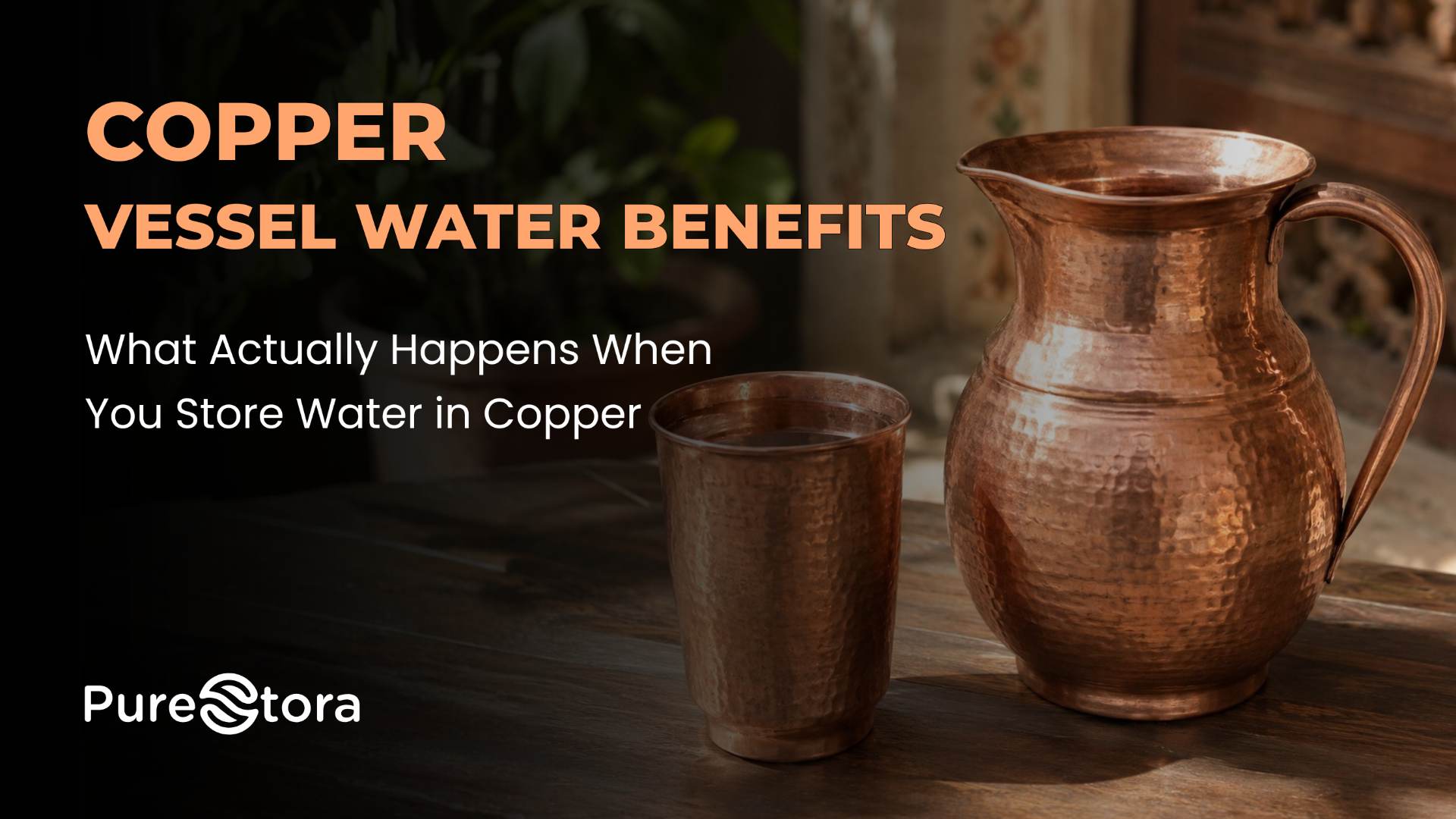
In most Indian homes a generation ago, there was a copper matka or copper vessel on the kitchen shelf. Water sat in it overnight. You drank from it in the morning. Nobody called it a wellness practice — it was just what you did.
Modern science has now caught up with why this worked. The mechanism is called the oligodynamic effect — the ability of trace amounts of copper ions to kill bacteria and other microorganisms in water. And the research supporting it is not New Age wellness content. It comes from India's own research institutions, testing copper against exactly the waterborne pathogens that cause disease in Indian conditions.
The Science Behind It — What Actually Happens
When water is stored in a copper vessel for 6–8 hours or more, copper ions dissolve into the water. These ions interfere with the cell membranes and enzymes of bacteria, effectively killing them — a process documented across multiple studies.
The most significant Indian study on this comes from the Institute of Ayurveda and Integrative Medicine, Bangalore, and the National Institute of Cholera and Enteric Diseases, Kolkata. Published in the Journal of Health, Population and Nutrition (PMC), the study tested copper pots against drinking water contaminated with six major diarrhoeagenic bacteria — including Vibrio cholerae, Salmonella Typhi, Shigella flexneri, and E. coli — at concentrations of 500 CFU/mL. After storing the contaminated water in copper pots for 16 hours at room temperature, none of the bacteria could be recovered on culture media. Not reduced — eliminated. The control glass bottles showed bacteria remained or slightly increased over the same period.
Critically, the copper leached into the water measured 177 ppb (parts per billion) — well within India's own safety standards. As per BIS IS 10500:2012 — India's official Drinking Water Specification (PDF), the acceptable limit for copper in drinking water is 50 ppb, with a permissible limit of 1,500 ppb in the absence of an alternate source. The copper vessel water was at 177 ppb — above the standard acceptable limit but well within the permissible range, and safe for normal daily consumption.
The researchers concluded that copper vessels represent a viable point-of-use water purification option for rural and low-income communities where conventional purification is unavailable — validating what Indian households have practiced for centuries.
What Copper Water Does — And What It Does Not Do
Be precise about this. The evidence supports specific claims. It does not support all the claims you will find online.
What the evidence supports:
- Antimicrobial action — copper ions kill bacteria including cholera, typhoid, dysentery-causing organisms. This is the strongest and most directly applicable benefit, particularly relevant in India where waterborne infections remain a significant concern.
- Copper as an essential micronutrient — your body needs trace amounts of copper for enzyme function, iron absorption, collagen formation, and nerve health. The human body cannot produce copper — it must come from food or water. Copper vessel water contributes a small but real dietary copper intake.
- Slightly alkaline pH — water stored in copper vessels shows a mild increase in pH, from around 7.83 to 7.93 in the Indian study. This is a minor shift but moves water in an alkaline direction, consistent with traditional Ayurvedic descriptions of tamra jal (copper-stored water).
What is NOT well supported:
- "Cures hypertension" — no clinical evidence. Copper water cannot cure high blood pressure.
- "Boosts immunity dramatically" — modest indirect contribution through trace copper micronutrient. Not a primary immunity tool.
- "Melts belly fat" — no evidence whatsoever. This claim is circulating widely online and is not backed by any research.
- "Alkalises the body" — the pH shift is real but minor. The body tightly regulates blood pH regardless. Do not conflate water pH with body pH.
How to Use a Copper Vessel Correctly
Getting the benefits requires using it the right way. Most people either overuse or underuse copper vessels.
How long to store water: Minimum 6–8 hours. Overnight is ideal. This is the timeframe in which the oligodynamic effect operates meaningfully. Drinking water that has been in a copper vessel for 20 minutes has not had sufficient contact time for the antibacterial action to occur.
How much to drink: 2–3 glasses (500–750ml) of copper vessel water per day is the traditional recommendation and aligns with safe copper intake levels. Do not drink all your water exclusively from copper vessels throughout the day — this can push copper intake above safe levels over time.
Time of day: Traditional Ayurvedic practice recommends drinking copper vessel water first thing in the morning on an empty stomach. This is called tamra jal and is specifically mentioned in classical Ayurvedic texts including Sushruta Samhita.
What not to store in copper: Do not store acidic liquids in copper vessels — lemon juice, tamarind water, vinegar, curd, buttermilk. Acid accelerates copper leaching significantly and can push copper levels above safe limits. This is a well-established traditional rule that modern chemistry confirms — and it is specifically noted in ICMR dietary guidelines regarding copper vessels. Copper is for water, not acidic drinks.
How to Identify a Genuine Copper Vessel
The copper vessel market has quality variation. Not all products claiming to be copper are pure copper — some are copper-plated steel or brass coated with copper. Here is how to tell the difference:
- The magnet test — pure copper is not magnetic. Hold a magnet near the vessel. If it attracts, the vessel is steel with copper coating, not pure copper. The oligodynamic effect requires direct contact between water and real copper.
- Patina over time — genuine copper develops a natural greenish patina (verdigris) over time when exposed to air and moisture. Copper-plated vessels either do not develop this or develop it only in spots where the plating is thin.
- Weight and feel — pure copper is noticeably heavier than steel of the same size. It also has a warmer feel than stainless steel.
- Colour — genuine copper has a distinctive reddish-brown colour. Brass (copper-zinc alloy) appears more yellow. Both have antimicrobial properties, but pure copper is more effective.
- Hand-hammered vs machine-pressed — traditional hand-hammered copper vessels have irregular texture that gives them visual character. Machine-pressed vessels are smooth and uniform. Both are genuine copper if the magnet test passes — the difference is craft quality, not functionality.
You can browse ORETROVE's hand-hammered copper bottles and copper glass sets on PureStora — verified for compliance before listing. For bedroom use, the copper bedside jar is a practical option for keeping overnight water ready.
How to Clean and Maintain a Copper Vessel
Copper requires different care than steel or glass. Getting this wrong reduces its effectiveness and creates unnecessary patina buildup.
- Daily rinse — rinse with plain water after each use. Do not leave water sitting for more than 24 hours as prolonged storage can lead to excessive copper leaching.
- Weekly cleaning — mix lemon juice and salt into a paste. Apply to the inside of the vessel, rub gently, rinse thoroughly. This removes patina buildup and keeps the copper surface active. Alternatively, use tamarind paste — the same traditional method used for centuries. Rinse thoroughly to remove all acid before refilling.
- Never use harsh chemical cleaners — soap and detergent leave residues that affect taste and can interfere with copper's ionic activity. Stick to natural acidic cleaners like lemon and salt.
- Let dry completely — after cleaning, let the vessel air dry completely before refilling. Moisture trapped inside can cause uneven patina.
- Do not put in dishwasher — high heat and harsh detergents will strip copper's natural surface and damage hand-hammered vessels.
Frequently Asked Questions
How long should I store water in a copper vessel?
At least 6–8 hours for the antimicrobial effect to work meaningfully. Overnight storage — filling in the evening, drinking in the morning — is the most practical approach and aligns with traditional tamra jal practice. Do not store for more than 24 hours, as prolonged storage increases copper leaching beyond the optimal range.
Is it safe to drink copper vessel water every day?
Yes, for most healthy adults — in the quantities described. 2–3 glasses per day is safe and falls within recommended copper intake levels. The Indian research study found that copper leaching in water was 177 ppb after 16 hours of storage, which is within India's permissible drinking water limits under BIS IS 10500:2012. Do not drink all your daily water from copper vessels — maintain a balance.
Can copper vessel water be given to children?
In small amounts — yes. Children have lower body weight so their copper intake needs are proportionally different. One glass of copper vessel water per day is a reasonable amount for older children. For infants and toddlers under 2 years, consult your paediatrician before introducing copper vessel water as a regular practice.
What should I not store in a copper vessel?
Never store acidic liquids — lemon juice, tamarind water, buttermilk, curd, vinegar, fruit juices. Acid dramatically accelerates copper leaching and can push copper concentration above safe levels. Copper vessels are specifically for water — still, plain water. This applies to cooking as well — do not cook acidic foods like sambar or khatti dal in copper vessels.
How do I know if my copper vessel is pure copper?
Use the magnet test — pure copper is not magnetic. If a magnet sticks, the vessel is copper-plated steel. Also check for the distinctive reddish-brown colour and heavier weight compared to steel of the same size. Genuine copper develops a natural greenish patina over time. For the antimicrobial effect to work properly, you need real copper in contact with the water.
Conclusion
Storing water in copper vessels is one of those Indian traditional practices where the science has caught up with the wisdom. The antimicrobial effect is real, the mechanism is understood, and the safety at normal usage levels is confirmed by Indian research and Indian water standards. The key is using it correctly — the right contact time, the right quantities, the right cleaning — and not falling for the overclaiming that surrounds copper water marketing online. For more on how traditional Indian wellness practices are being validated by research, our guide on Ayurvedic herbs for monsoon immunity covers several more traditions with solid research behind them. You can also browse the full range of certified home and living products on PureStora — including copper vessels, sustainable kitchenware, and more.
This article is for general informational purposes only and is not a substitute for medical advice. If you have a health condition or take medication, consult a qualified healthcare professional before making changes to your daily routine.
