
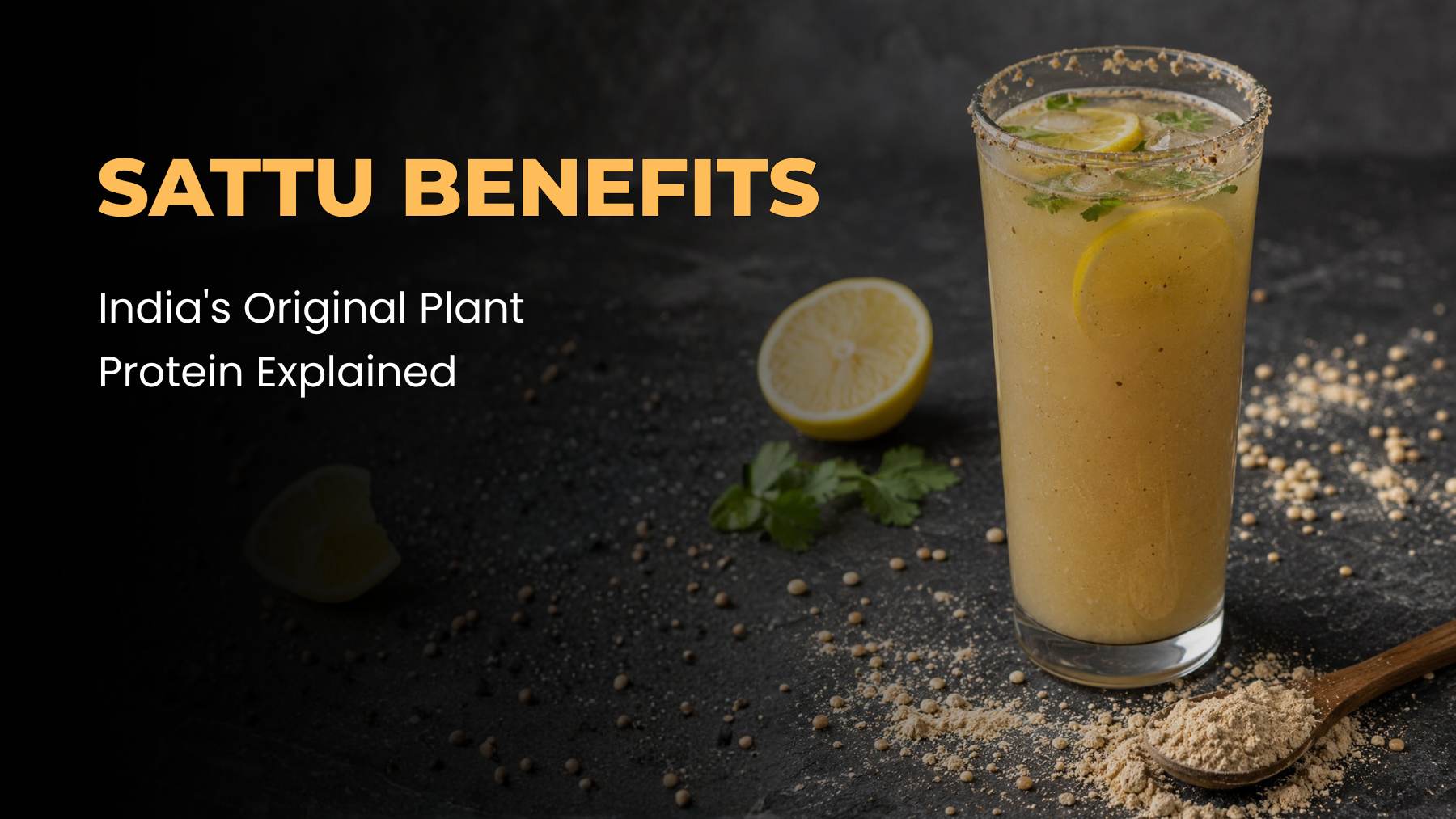
Bihar's farmers have been drinking sattu before a day's work in 40-degree heat for centuries. No blender, no refrigeration, no ₹3,000 tub with a shaker bottle. Just roasted gram flour stirred into water with lemon and black salt. That same drink turns out to have 20–25g of protein per 100g, more dietary fibre than most commercial protein products, and a glycaemic index low enough to sustain energy through a morning of hard physical work. The protein supplement industry would love you not to notice this.
Quick Answer: Sattu is flour made from roasted Bengal gram (chana), barley, or a mix of both. It contains approximately 20–25g of protein per 100g, 8–12g of dietary fibre, iron, magnesium, and calcium. Research on its component ingredients suggests it supports sustained energy, digestive health, and blood sugar regulation — particularly when drunk as sattu sharbat in the morning or before exercise. It is cooling, low in fat, costs ₹80–120 per kilo, and has been a daily staple in Bihar and UP for generations.
What Sattu Is — and Why a Drink This Cheap Has Lasted This Long
Sattu is roasted grain flour. Chickpeas or barley — or both — are dry-roasted until they develop a nutty, slightly smoky character, then ground to a powder. No oil, no additives, nothing beyond heat and grinding. The roasting makes it shelf-stable without refrigeration and easier to digest than raw dal, because the heat partially breaks down the starches. That is why sattu sharbat sits lighter in your stomach at 6am than any cooked meal would.
Two versions matter. Chana sattu — Bengal gram — is the one you will find most easily. Higher in protein, more neutral in flavour, the base for litti chokha and sattu parathas. Jau sattu — barley — is earthier, harder to find, and has a specific advantage for blood sugar and cholesterol we will come to. Most packaged sattu today is chana sattu or a multigrain blend.
Here is what makes sattu unusual: it did not get popular because a nutritionist wrote about it. It survived because it actually worked — keeping physically demanding people fed and energised in conditions where anything that did not deliver would have been abandoned generations ago. That is a more honest proof of concept than most clinical trials.
The One Sattu Number That Should Stop You
Per 100g dry weight, chana sattu has roughly 20–25g of protein. That is comparable to many commercial protein powders, but protein is not the number worth stopping at. The number that matters is the fibre: 8–12g per 100g.
Most whey protein products contain less than 1g of fibre per serving. Most plant protein blends are barely better. Sattu, at 8–12g of fibre per 100g, is not in the same conversation. The ICMR-NIN Dietary Guidelines for Indians 2024 (PDF) recommend approximately 25g of fibre per 1,000 kcal daily. Most Indian urban diets deliver far less. A standard 35g serving of sattu in your morning drink gets you meaningfully toward that target before you have eaten anything.
One more number worth knowing: that 35g serving delivers roughly 7–10g of protein. That is one egg or a medium katori of dal — in 90 seconds, no cooking, no dishes.
What Drinking Sattu Actually Does — Mechanism by Mechanism
Let us be specific, because vague health claims help no one.
Your energy runs steadier. Sattu has a low glycaemic index. The carbohydrates release into your bloodstream slowly, not in a spike. If your current breakfast is bread, poha, or white rice and you are hungry again by 10am, that is not a willpower problem. It is a blood sugar problem. Replacing that breakfast with sattu sharbat is a structural fix — the mechanism is the GI, not the motivation.
Your gut gets prebiotic support. Sattu contains resistant starch — a fibre your small intestine cannot digest but your gut bacteria thrive on. Research on resistant starch consistently shows improved gut microbiome diversity, better bowel regularity, and reduced gut inflammation over time. The traditional recommendation to drink sattu on an empty stomach in the morning is not folklore. It is prebiotic feeding, described in the language available at the time.
Your protein intake closes its gap. The ICMR-NIN recommends 0.8–1g of protein per kg of body weight daily for healthy adults. Most Indian vegetarian diets fall short — the same ICMR data shows pulses and legumes contribute far less than the recommended 14–15% of daily calories in most Indian households. One glass of sattu sharbat in the morning is the simplest structural fix available. The lysine content in chana sattu specifically helps, because lysine is the amino acid most limited in cereal-heavy diets. Pair sattu sharbat with your morning roti and you have created a more complete protein combination than either provides alone. For a full picture of plant protein options, see our guide on the best organic protein sources for vegetarians in India.
Your body cools down in summer — for a real reason. This is not a metaphor. Sattu's fibre slows gut motility and supports fluid retention. Its magnesium and potassium replace electrolytes lost through sweat. Its complex carbohydrates give sustained energy without the heat-generating metabolic spike that refined sugar causes. Bihar's farmers were not drinking sattu in June because they enjoyed the taste. They drank it because they needed to function in the heat.
Your iron levels get a meaningful nudge — if you use lemon. Sattu contributes 4–6mg of iron per 100g. Plant iron absorbs less efficiently than animal iron on its own — but vitamin C dramatically improves non-haem iron absorption. The lemon in traditional sattu sharbat is not decorative. It doubles the bioavailability of the iron. The recipe is functional nutrition that predates the vocabulary to describe it.
How to Make Sattu Sharbat So It Actually Works
The basic version: 35g of sattu in a glass of room-temperature water, juice of half a lemon, a pinch of kala namak (black salt), half a teaspoon of roasted jeera powder. Stir hard for 30 seconds. Drink immediately — sattu settles if you leave it.
Four things that matter more than most recipes mention:
Use room temperature water, not ice cold. The fibre works better at gut temperature, and ice cold water first thing in the morning is harder on digestion than most people realise. Use kala namak rather than regular salt — the sulphur compounds in black salt are part of why the traditional recipe supports digestion specifically. The lemon is non-negotiable if iron absorption matters to you. And start with 20g if you are new to high-fibre foods. Jump to 35g on day one and your digestive system will have strong opinions about it for the next 24 hours.
The savoury Bihar version uses the same base but adds finely chopped onion, green chilli, fresh coriander, and a few drops of mustard oil. It tastes like a meal more than a drink, and it keeps you full for four hours. That is the version Bihar's labourers drank before a shift — not for wellness reasons, but because it worked.
Sattu paratha — stuffed flatbread with onion, green chilli, and spices — is the solid-food alternative. High protein, high fibre, complete breakfast. Sattu laddoo with jaggery, ghee, and nuts is the pre-exercise energy food that no commercial energy bar has managed to meaningfully improve on. And litti chokha — sattu-stuffed dough balls roasted over coal, served with smoked brinjal mash — is Bihar's flagship dish and one of the most nutritionally complete traditional meals in Indian cooking.
Barley Sattu Has One Advantage Chana Sattu Does Not
Jau sattu gets overlooked because chana sattu is easier to find, but there is a specific reason to know about it. Barley contains unusually high levels of beta-glucan — a soluble fibre with one of the cleaner evidence bases in nutrition research. A study in the European Journal of Clinical Nutrition found barley beta-glucan significantly reduced post-meal blood glucose in patients with type 2 diabetes. Multiple systematic reviews link it to LDL cholesterol reduction.
If you are managing blood sugar or cholesterol, the case for jau sattu is more targeted than for chana sattu. The flavour is earthier, it is harder to find in packaged form, but the functional justification is specific rather than general. Rajasthan and Punjab use barley sattu as the base for summer cooling drinks — the regional tradition aligns with the mechanism.
How to Tell if Your Sattu Is Real — Three Checks, 60 Seconds
The Indian packaged sattu market has a filler problem. Maida is cheap. Some producers mix it into sattu powder to reduce cost and improve texture. You will not taste the difference. You will just get less protein and more refined flour than you paid for.
Check one — the ingredient list. Genuine sattu: roasted Bengal gram, or roasted Bengal gram and barley. That is it. If you see maida, wheat flour, artificial flavour, added sugar, or starch — it is not pure sattu. Put it back.
Check two — the protein number. Genuine chana sattu shows 20g or more of protein per 100g on the nutrition label. Below 15g means significant filler. This takes five seconds to check and tells you everything you need to know about the product.
Check three — what happens in the glass. Pure sattu dissolves with vigorous stirring and leaves minimal sediment. Adulterated sattu leaves a thick floury layer at the bottom of the glass that does not stir in. That is the maida settling out. If you see it, the product has failed the test.
For certified organic sattu — meaning grain grown without synthetic pesticides — look for the Jaivik Bharat or India Organic logo on the packaging. At PureStora, every vendor submits valid certification documentation before listing. The Sattu Flour 1kg by The MMasala Box Co on PureStora is made from premium roasted grains with no fillers. For more on reading organic certification marks, see our guide on how to identify genuine organic products in India.
Frequently Asked Questions
What are the benefits of drinking sattu every day?
A daily glass of sattu sharbat using 30–40g of powder delivers 7–10g of protein, 3–5g of dietary fibre, and meaningful amounts of iron, magnesium, and calcium. Research on its component ingredients supports blood sugar regulation, digestive health, and sustained satiety. Most healthy adults can drink it daily without issue. If you have kidney disease or are on a protein-restricted diet, check with a doctor first.
Is sattu better than whey protein for daily use?
For different purposes, they do different things. Whey digests fast and is built for post-workout muscle protein synthesis within the 30–60 minute window after training. Sattu digests slowly, carries fibre that whey does not, costs a fraction of the price, and sustains energy over hours. For general daily nutrition, gut health, and affordable protein — sattu is the better choice for most people. For targeted post-workout recovery with a specific muscle-building goal, whey is more precise. Most people in a general active lifestyle do not need whey and are better served by sattu for everyday use.
What is the difference between chana sattu and barley sattu?
Chana sattu has more protein — 20–25g per 100g — and is the right choice for general daily protein intake. Barley sattu has more beta-glucan, a soluble fibre with specific evidence for LDL cholesterol reduction and better post-meal blood glucose response. For blood sugar or cholesterol management, barley sattu has the more targeted case. For everything else, chana sattu is more practical and easier to find.
What is the best time to drink sattu?
First thing in the morning on an empty stomach is the most effective timing — the fibre activates digestion, the protein sustains energy through the morning, and lemon in the drink improves iron absorption from your subsequent meals. It also works 30–45 minutes before exercise as a sustained-energy pre-workout. In summer, mid-afternoon as a cooling drink is both traditional and physiologically sound. If you are new to high-fibre foods, start at 20g per day and build up over a week.
How do I know if sattu powder is genuine and not adulterated?
Three checks: ingredient list should show only roasted Bengal gram or barley — nothing else. Protein on the nutrition label should be 20g or more per 100g for chana sattu. And when you stir it in water, genuine sattu dissolves cleanly with minimal sediment. Adulterated sattu leaves a thick floury layer at the bottom. For verified sattu with no fillers, browse PureStora's Food & Beverages range.
Can sattu help with weight management?
High-fibre, high-protein foods consistently show improved satiety and reduced overall calorie intake in research — sattu fits both. It is not a weight-loss product. But replacing a refined-carb breakfast with sattu sharbat is a structural dietary improvement that most people notice within a week or two in how long they stay full. At roughly 110–120 kcal per 30g serving, it fits into a calorie-conscious day without displacing other nutrients.
Conclusion
Sattu's case is simple: a profile that kept physically demanding people healthy for centuries, 20-plus grams of protein per 100g, fibre that almost no supplement product matches, and a cost of ₹80–120 per kilo. The only variable is buying it without fillers — which the ingredient label and the protein number on the back will tell you in 60 seconds. For other verified organic staples that meet the same standard of ingredient transparency, browse PureStora's Health & Wellness range.
Disclaimer: This article is for general informational purposes only and is not a substitute for medical, nutritional, or professional advice. Nutritional values are approximate and may vary by variety, brand, and processing method.
