
Every June, the same things happen across India. The rains arrive. The heat breaks. And then, within two weeks, half the office has a cold. Someone has dengue. The local clinic has a queue.
Monsoon is genuinely the hardest season on your immune system. The humidity creates a breeding ground for bacteria and viruses. Your digestive fire — what Ayurveda calls agni — weakens in damp weather, and when digestion suffers, immunity follows. Water-borne infections spike. Vector-borne diseases like dengue and malaria peak between July and September every year.
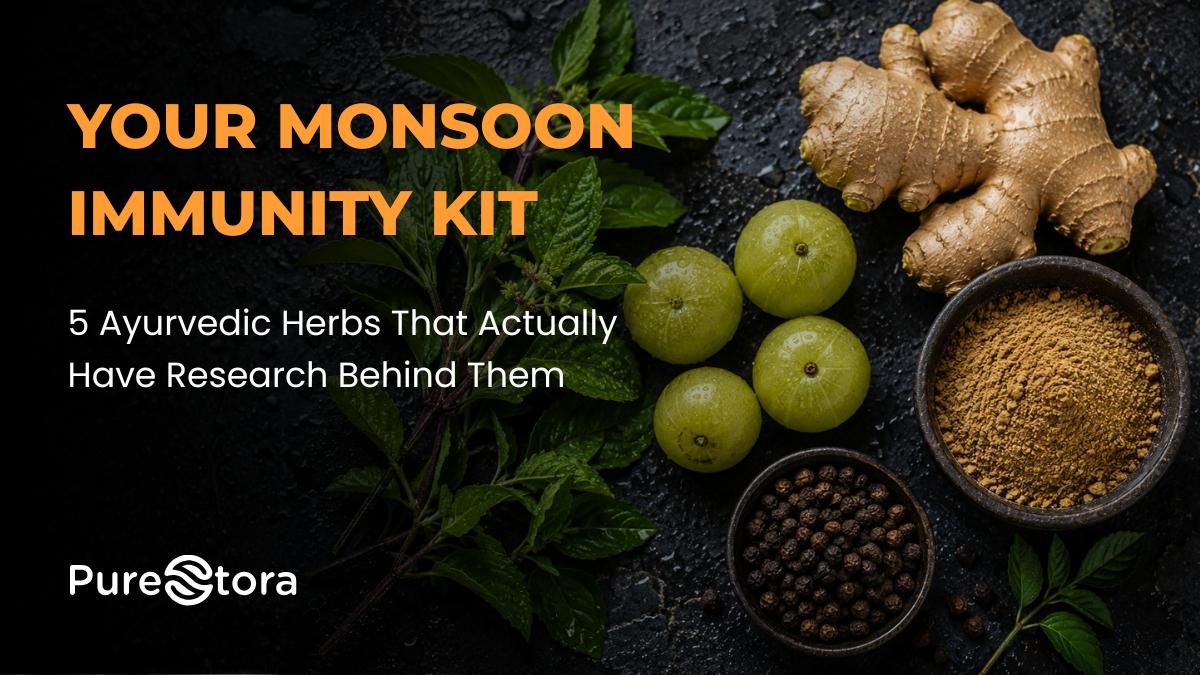
The good news: five Ayurvedic herbs with genuine research behind them address exactly these vulnerabilities. Most Indian kitchens already have at least three of them.
Why Monsoon Specifically Weakens Your Immunity
This is not folklore. There are real physiological reasons your body is more vulnerable in the rainy season.
Humidity slows down mucus clearance in the respiratory tract — the mechanism that normally traps and expels pathogens before they reach the lungs. Stagnant water creates breeding grounds for mosquitoes. Contaminated water sources lead to sharp spikes in gut infections — typhoid, cholera, and hepatitis A cases increase 25-30% during monsoon months in India according to public health data.
Meanwhile, your gut microbiome — directly connected to immune function — gets disrupted by the seasonal dietary shift toward heavier, less digestible foods. If your gut is struggling, your immune response is slower.
This is why Ayurveda specifically developed a monsoon protocol called Varsha Ritucharya — a seasonal regimen designed for exactly these conditions. The five herbs below are the core of that protocol, validated by both traditional use and modern research.
1. Tulsi — The Herb in Every Indian Courtyard
Tulsi (Ocimum sanctum) grows in the courtyard of almost every Hindu household for a reason that predates modern science. It is one of the most studied medicinal herbs in India — and the research is more solid than most people realize.
The Ministry of AYUSH's official immunity advisory specifically recommends a daily decoction of Tulsi, ginger, black pepper, and cinnamon — citing Ayurvedic literature and scientific publications. Clinical research also confirms tulsi demonstrates immunomodulatory effects — specifically increasing Natural Killer cells and T-helper cells — in healthy adults within 4 weeks of daily use. All 24 studies reported favourable outcomes with minimal side effects.
For monsoon specifically, tulsi addresses two vulnerabilities at once. Its antimicrobial compounds — primarily eugenol — help fight respiratory pathogens that thrive in humid conditions. And its adaptogenic properties help your body regulate the stress response, which is directly linked to immune function.
How to use it: 4-5 fresh leaves in warm water every morning, or as tulsi tea. The traditional preparation is a decoction — boiling leaves in water for 5 minutes, straining, drinking warm. You can also use certified organic tulsi infusion as a convenient daily habit.
Important: tulsi has mild blood-thinning properties. If you are on anticoagulant medication, check with your doctor before consuming large amounts.
2. Ginger — The Monsoon Digestive
Ginger is not just a cooking spice. In the context of monsoon immunity, it does something specific and important: it supports digestive fire when humidity is working against it.
The weakening of digestion in monsoon is not imaginary. Your gut microbiome shifts with the season, and when digestion is incomplete, partially fermented food in the gut increases inflammation and weakens the gut wall — directly reducing immune response. Ginger's active compound gingerol has documented anti-inflammatory and antimicrobial properties, and multiple studies support its role in stimulating gastric acid production and improving gut motility.
A 2024 Cureus review of Indian medicinal botanicals confirmed ginger's anti-inflammatory and immunomodulatory properties alongside tulsi and amla, noting that these herbs show consistent effects across traditional systems and emerging research — while acknowledging that large-scale randomised trials are still needed for definitive clinical recommendations.
How to use it: a thumb-sized piece of fresh ginger in warm water with lemon juice before meals. Or ginger powder — half a teaspoon in warm water. The traditional monsoon preparation is ginger with rock salt before meals, which directly stimulates digestive enzymes.
3. Amla — The Vitamin C Powerhouse India Already Has
Indian gooseberry (Emblica officinalis) contains more vitamin C per gram than most fruits. This is not a marketing claim — it is well-documented in food composition databases. The vitamin C in amla is also more stable than synthetic vitamin C supplements because it is bound with tannins that slow oxidation.
Vitamin C's role in immunity is one of the most consistently supported findings in nutritional research. It stimulates white blood cell production, protects immune cells from oxidative damage, and supports the skin barrier — the body's first line of defence against pathogens. During monsoon specifically, when skin is constantly exposed to moisture and pathogens have more entry points, this matters.
Amla also contains chromium, which helps regulate blood sugar — relevant because blood sugar spikes directly suppress immune function. If you are reaching for chai with biscuits every two hours during the rainy season, amla in the morning helps stabilise what happens for the rest of the day.
How to use it: one fresh amla or one teaspoon of amla powder in water every morning. Avoid heating amla — vitamin C degrades with heat. Amla murabba (preserved in sugar) is traditional but the sugar load reduces the benefit. Raw or powder is better for immunity.
4. Triphala — The Gut Cleaner
Triphala is a blend of three fruits: Amla (Emblica officinalis), Haritaki (Terminalia chebula), and Bibhitaki (Terminalia bellirica). In Ayurveda it is the most widely prescribed preparation for digestive health — and for monsoon specifically, it addresses the core vulnerability.
The reason triphala matters in monsoon is the gut-immunity connection. Roughly 70% of immune function is housed in the gut lining. When monsoon disrupts digestive fire and beneficial gut bacteria, the gut wall becomes more permeable — allowing partially digested food particles and pathogens to cross into the bloodstream, triggering chronic inflammation that suppresses immunity over time.
Triphala's three fruits each address a different aspect of this: amla provides antioxidant protection, haritaki supports bowel regularity and removes accumulated waste, and bibhitaki has documented antimicrobial properties against common gut pathogens. The combination is greater than the sum of its parts — which is why it has been used as a daily supplement in Ayurveda for over 2,000 years.
How to use it: half to one teaspoon of triphala powder in warm water at bedtime, or triphala capsules. Do not take with milk. Start with a small dose and increase slowly — triphala has a laxative effect at higher doses and needs to be introduced gradually. You can explore certified organic triphala powder on PureStora.
Important: triphala is not recommended during pregnancy. Check with your doctor if you have iron deficiency anaemia — haritaki may affect iron absorption.
5. Black Pepper — The Absorption Booster
Black pepper does not get listed in immunity articles because it does not have dramatic standalone benefits. But it earns a place here for something more practical: it dramatically improves the absorption of everything else on this list.
Piperine — the active compound in black pepper — is one of the most potent bioavailability enhancers in the food world. It increases the absorption of curcumin from turmeric by up to 2,000%. It improves the absorption of vitamin C from amla. It enhances the bioavailability of gingerols from ginger. Adding a pinch of black pepper to any of the preparations above is not just traditional flavouring — it materially increases how much your body actually absorbs from everything else.
How to use it: a pinch in your ginger-lemon water. A pinch in your turmeric milk. A pinch in your triphala preparation. It does not need to be a large amount — piperine is potent in small doses.
How to Build This Into a Daily Monsoon Routine
You do not need all five every day. Here is a practical, low-effort monsoon routine that covers the key bases:
- Morning: Amla powder in warm water with a pinch of black pepper. This is 2 minutes of preparation and covers your vitamin C, antioxidant base, and absorption support for the day.
- Before meals: Fresh ginger with a pinch of rock salt. This activates digestive enzymes before you eat — the single most important thing you can do for gut health in monsoon.
- During the day: Replace one regular chai with tulsi tea. Most of the benefit comes from consistent daily use over 4+ weeks — one cup a day is enough.
- Bedtime: Half teaspoon triphala in warm water. Works best overnight when the gut is not processing food.
If you want a ready-made option that combines several of these, Daily Defense — Immunity in a Cup is a blend of Ayurvedic immunity herbs available on PureStora, verified for FSSAI compliance before listing.
What to Watch Out For
A few honest notes before you start:
- None of these herbs prevent or cure dengue, malaria, or typhoid. They support baseline immunity. They are not a replacement for mosquito prevention, clean water, or medical treatment if you are actually sick.
- If you are on medication — especially blood thinners, diabetes medication, or thyroid medication — check with your doctor before adding any of these regularly. Tulsi, ginger, and amla all have documented interactions with these drug categories.
- Buy from sources that carry FSSAI licence numbers and, for products claiming organic status, the India Organic (NPOP) or Jaivik Bharat certification mark. The herbal supplement market in India has significant quality variation.
- Give it at least 4 weeks before judging results. These are not fast-acting drugs. They work by gradually restoring your baseline — not by producing overnight effects.
Frequently Asked Questions
Which Ayurvedic herb is best for immunity during monsoon?
Tulsi has the strongest research base specifically for immunomodulatory effects in humans. But for monsoon specifically, triphala is equally important because it addresses the gut-immunity connection that monsoon weakens. The most effective approach is a combination rather than a single herb — tulsi for respiratory immunity, triphala for gut health, amla for vitamin C and antioxidant protection, and ginger for digestive support.
Can I take all five of these herbs together?
Yes — these five are complementary and are commonly combined in traditional Ayurvedic protocols. The exception is if you are on medication, particularly blood thinners, thyroid medication, or diabetes medication. In that case, consult your doctor before combining them. For healthy adults, taking tulsi tea, amla, ginger, and triphala together is standard traditional practice.
How long do these herbs take to work for immunity?
Most clinical studies on tulsi and amla ran for 4–12 weeks before measuring immunity-related outcomes. Research suggests consistent daily use for at least 4 weeks produces measurable changes in immune markers. These herbs work by improving your baseline — not by producing rapid effects. Start before or at the beginning of monsoon, not after you are already sick.
Is it safe to give these herbs to children during monsoon?
Tulsi tea and amla are generally considered safe for children in moderate amounts and are widely used in traditional Indian child care. Triphala and ginger are also used in children's Ayurvedic preparations but in smaller doses. Always consult a paediatrician before starting any regular herbal supplement for a child, particularly for younger children under 5.
Where can I buy certified organic versions of these herbs?
Look for FSSAI licence numbers on packaging — mandatory for all packaged food in India. For organic claims, check for the India Organic or Jaivik Bharat certification mark. You can browse verified certified Ayurvedic wellness products on PureStora — every vendor is checked for valid certification before listing.
Conclusion
The monsoon immunity protocol in Ayurveda is not superstition — it is a seasonal response system developed over centuries of observation, now increasingly backed by research. Tulsi, ginger, amla, triphala, and black pepper address the specific vulnerabilities that monsoon creates: weakened respiratory immunity, disrupted digestion, reduced gut health, and increased pathogen exposure. None of them is a magic cure. Together, used consistently, they give your immune system a meaningful advantage through India's most infection-prone season. For more on how certified organic herbs and supplements are verified before listing, our guide on verifying organic certification in India covers what to look for on every label.
This article is for general informational purposes only and is not a substitute for medical advice. These herbs may interact with certain medications. If you have a health condition or take regular medication, consult a qualified healthcare professional before adding any new supplement to your routine.
