
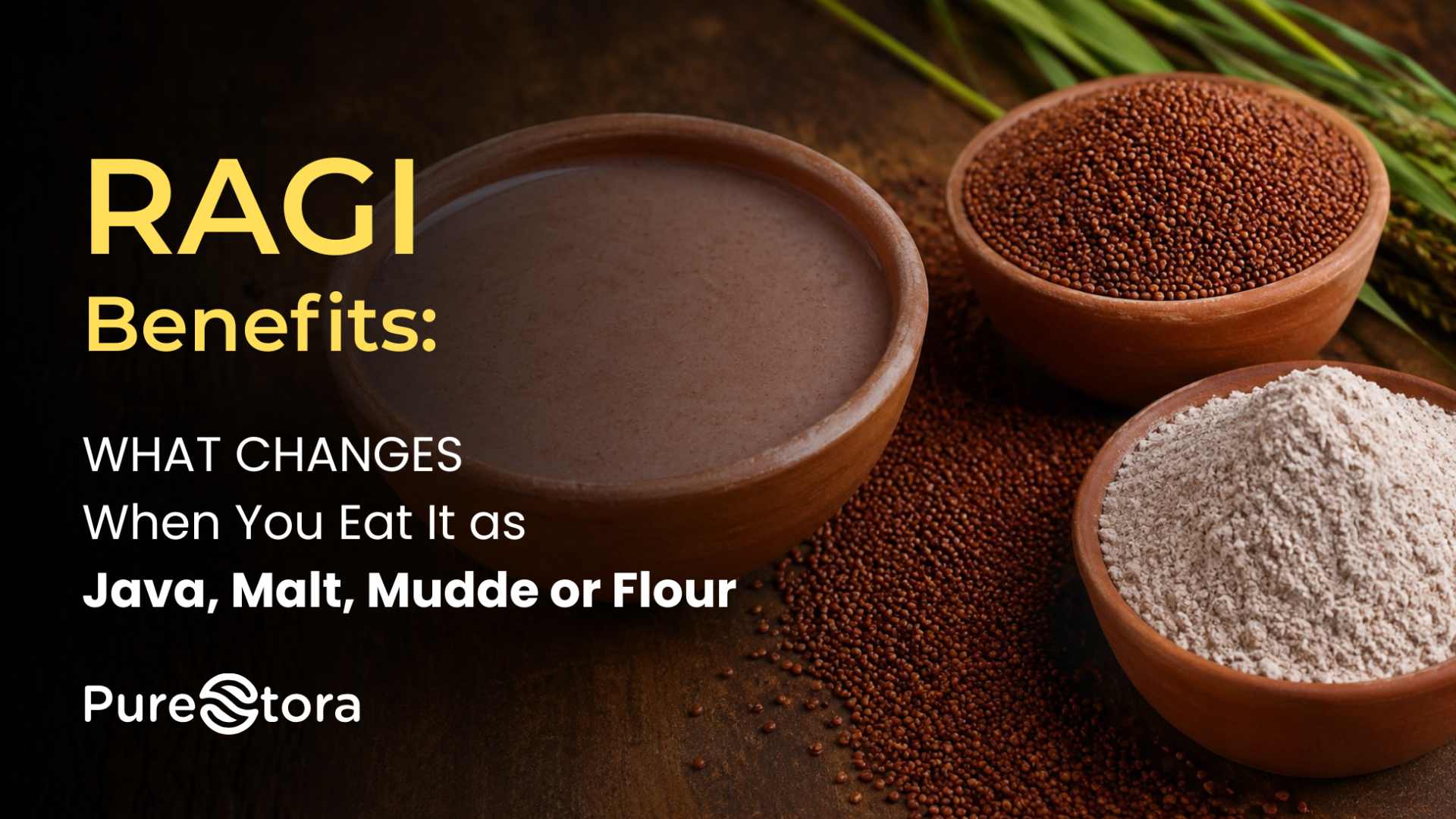
Most people know ragi is "good for you." But good for what, exactly? And does it matter whether you eat it as a java, malt drink, mudde, or flour? The answer is yes — and knowing the difference helps you pick the right preparation for your goal.
Ragi (finger millet) contains approximately 344mg of calcium per 100g, making it one of the richest plant-based sources of calcium among commonly consumed grains in India. It is also gluten-free, low on the glycemic index, and high in dietary fibre.
Why Ragi Fell Off the Indian Plate — And Why It's Coming Back
A generation ago, ragi was a daily staple across Karnataka, Andhra Pradesh, Tamil Nadu, and Odisha. Farmers ate ragi mudde before long days in the field. Mothers made ragi java as the first solid food for infants. It was functional food before anyone used that term.
Then refined wheat and polished rice took over. Ragi quietly disappeared from most urban kitchens. Today it is coming back — and the science is backing up what grandmothers already knew.
Karnataka alone accounts for around 58% of India's total ragi production according to government agricultural data. The grain never stopped being grown. It just stopped being eaten by people who could afford not to.
What's Actually in Ragi — The Numbers
Per 100g of raw ragi, the ICMR Dietary Guidelines for Indians 2024 (PDF) show approximately:
- Calcium: 344mg — among the highest of any commonly eaten grain
- Iron: 3.9mg
- Dietary fibre: 3.6g
- Protein: 7.3g
- Glycemic Index: approximately 54 (low)
- Calories: 328 kcal
Ragi is also one of the few plant grains containing essential amino acids — including methionine and tryptophan — typically absent in rice and wheat. This matters especially for vegetarian diets.
One important note: ragi contains phytic acid, a natural compound that can reduce mineral absorption. Soaking, fermenting, or sprouting ragi before cooking significantly reduces phytic acid and improves how much calcium and iron your body actually absorbs. Traditional preparations almost always involved soaking — they were smarter than they looked.
Ragi Java Benefits
Ragi java is a thin cooked porridge — ragi flour dissolved in water, cooked until smooth, then thinned with buttermilk or water. It is one of the most traditional ragi preparations across South India.
Because ragi java typically uses pre-roasted or fermented flour, phytic acid is already reduced before you eat it. Your body absorbs more of the calcium and iron compared to unprocessed ragi.
Research suggests ragi java may help with:
- Blood sugar management — the low GI means glucose releases slowly, avoiding the spike-and-crash of refined carbohydrate breakfasts
- Digestive comfort — high fibre supports regular bowel movement without being harsh on the stomach
- Satiety with low calories — the watery consistency is filling without being heavy
For people managing blood sugar, ragi java in the morning is a more useful preparation than ragi roti — the lower solid content means even slower digestion. Always consult your doctor before making dietary changes for a specific health condition.
Ragi Malt Benefits
Ragi malt is made from sprouted, dried ragi flour mixed with warm water or milk and sweetened with jaggery. It is both sold commercially and made at home.
Sprouting changes the nutritional profile significantly. The process breaks down phytic acid and activates enzymes that increase the bioavailability of calcium, iron, and B vitamins. Ragi malt made from sprouted flour delivers more usable nutrition than the same quantity of unsprouted flour.
Ragi malt is particularly useful for:
- Children and adolescents — the calcium-to-calorie ratio supports bone development without the processing load of commercial malt beverages
- Elderly adults — easier to consume than solid ragi preparations, still delivers meaningful calcium
- Post-workout recovery — provides slow-release carbohydrates with natural sugars from jaggery
When buying ragi malt, check whether the product uses sprouted ragi flour — not all commercial products do. Sprouted varieties deliver meaningfully more nutrition.
Ragi Flour Benefits
Ragi flour is the most versatile form — used to make roti, dosa, idli, ladoo, and baked goods. It is what most people mean when they say they "cook with ragi."
The key advantage over refined wheat flour is what ragi flour doesn't have: gluten, and the blood sugar spike that comes with refined carbohydrates. For people with gluten intolerance or celiac disease, ragi flour is one of the more practical wheat substitutes in Indian kitchens.
Ragi flour benefits are best realised when:
- The flour is stone-ground (chakki-ground) rather than roller-milled — roller milling generates heat that reduces some nutrient content
- It is used fresh — ragi flour turns rancid faster than wheat flour due to its fat content. Store in an airtight container and use within 3 months of opening
- It replaces at least 30–50% of wheat flour in a recipe, not just a small addition
If you are buying certified organic ragi flour, look for the India Organic (NPOP) or Jaivik Bharat logo on the packaging. According to FSSAI's Organic Food Standards, only products certified under NPOP or PGS-India are permitted to carry these marks. You can browse certified organic grain and millet products verified against these standards on PureStora.
Ragi Mudde Benefits
Ragi mudde is a stiff cooked ball of ragi flour — a staple of rural Karnataka eaten with sambar or saaru. It is made by cooking ragi flour in boiling water until it forms a thick dough-like consistency, then rolled into balls.
Mudde has the highest fibre density of all ragi preparations because nothing is diluted or thinned. It keeps you full for longer than java or malt — which is why it was historically the food of choice before physically demanding work.
The trade-off: mudde is the hardest preparation if you are not already used to it. The texture is dense and the taste is strong. Start with smaller portions and pair with well-spiced sambar to make the transition easier.
Ragi for Babies: What You Need to Know
Ragi has been used as a weaning food across South India for generations — and research supports this. Its calcium and iron content makes it genuinely useful during the 6–12 month stage when breast milk alone begins to fall short of a growing infant's needs.
A few important rules for introducing ragi to babies:
- Start only after 6 months — not before
- Use sprouted ragi flour — sprouting reduces phytic acid, which is especially important for infants whose digestive systems are still developing
- Introduce as a single ingredient first — watch for any reaction before combining with other foods
- No added salt or sugar for infants under 1 year — sweeten only with mashed banana if needed
If you are looking for certified organic sprouted ragi for babies, USDA Organic and FSSAI certified baby food is available on PureStora — every product is verified for valid certification before listing.
How to Choose Ragi Products — What to Check Before Buying
Not all ragi products on the market are equal. A few things to verify before buying:
- Certification: Look for the India Organic (NPOP) or Jaivik Bharat logo on packaging — only certified products are permitted to carry these marks under FSSAI's Organic Food Standards
- Sprouted vs unsprouted: For malt and baby food, sprouted is meaningfully better for nutrition absorption
- Stone-ground vs roller-milled: For flour, stone-ground retains more nutrients
- Packaging date: Ragi flour goes stale faster than wheat — check the manufacturing date, not just the expiry date
At PureStora, every vendor is verified for certification before their products are listed. You will not find uncertified products labelled as organic on the platform.
Frequently Asked Questions
What are the main ragi benefits for weight loss?
Ragi's high fibre content promotes satiety — you feel full longer after eating it compared to refined grains. Its low glycemic index of approximately 54 means slower glucose release, which reduces cravings between meals. Research suggests including high-fibre whole grains like ragi in a balanced diet may support weight management over time, but ragi alone is not a weight loss solution.
Is ragi java good for diabetes?
Research suggests ragi java may help manage blood sugar levels due to its low glycemic index. The slow glucose release is gentler on blood sugar than most breakfasts made from refined wheat or white rice. Always consult your doctor before making dietary changes specifically for diabetes management.
What is the difference between ragi malt and ragi java?
Ragi java is a thin savoury porridge made from ragi flour, usually consumed warm with buttermilk. Ragi malt is made from sprouted ragi flour, typically sweetened with jaggery and mixed with milk or water. Ragi malt made from sprouted flour delivers higher bioavailable calcium and iron because sprouting reduces phytic acid before consumption.
Can I eat ragi every day?
Yes — ragi is safe for daily consumption for most people as part of a balanced diet. People with thyroid conditions should be aware that very high intake may interfere with iodine uptake in some cases. Moderate daily consumption of 1–2 servings is well within safe range for most healthy adults. Consult your doctor if you have a specific health condition.
Where can I buy certified organic ragi products in India?
Look for products carrying the India Organic (NPOP) or Jaivik Bharat certification mark — only products that have passed FSSAI's organic certification process are permitted to display these logos. You can browse certified organic whole grains and health foods on PureStora — each vendor is checked for valid certification before listing.
Conclusion
Ragi is not a new superfood — it is an old staple that urban India walked away from and is now walking back to. The preparation you choose should match your goal: java and malt for easier digestion and absorption, flour for everyday cooking versatility, mudde for maximum satiety. For more on how to verify that any grain or food product is genuinely certified before buying, our guide on identifying certified organic products in India covers exactly what to look for on the label.
This article is for general informational purposes only and is not a substitute for medical, nutritional, or professional advice. Nutritional values are approximate and may vary by variety, brand, and processing method. If you have a specific health condition, consult a qualified healthcare professional before making dietary changes.
