
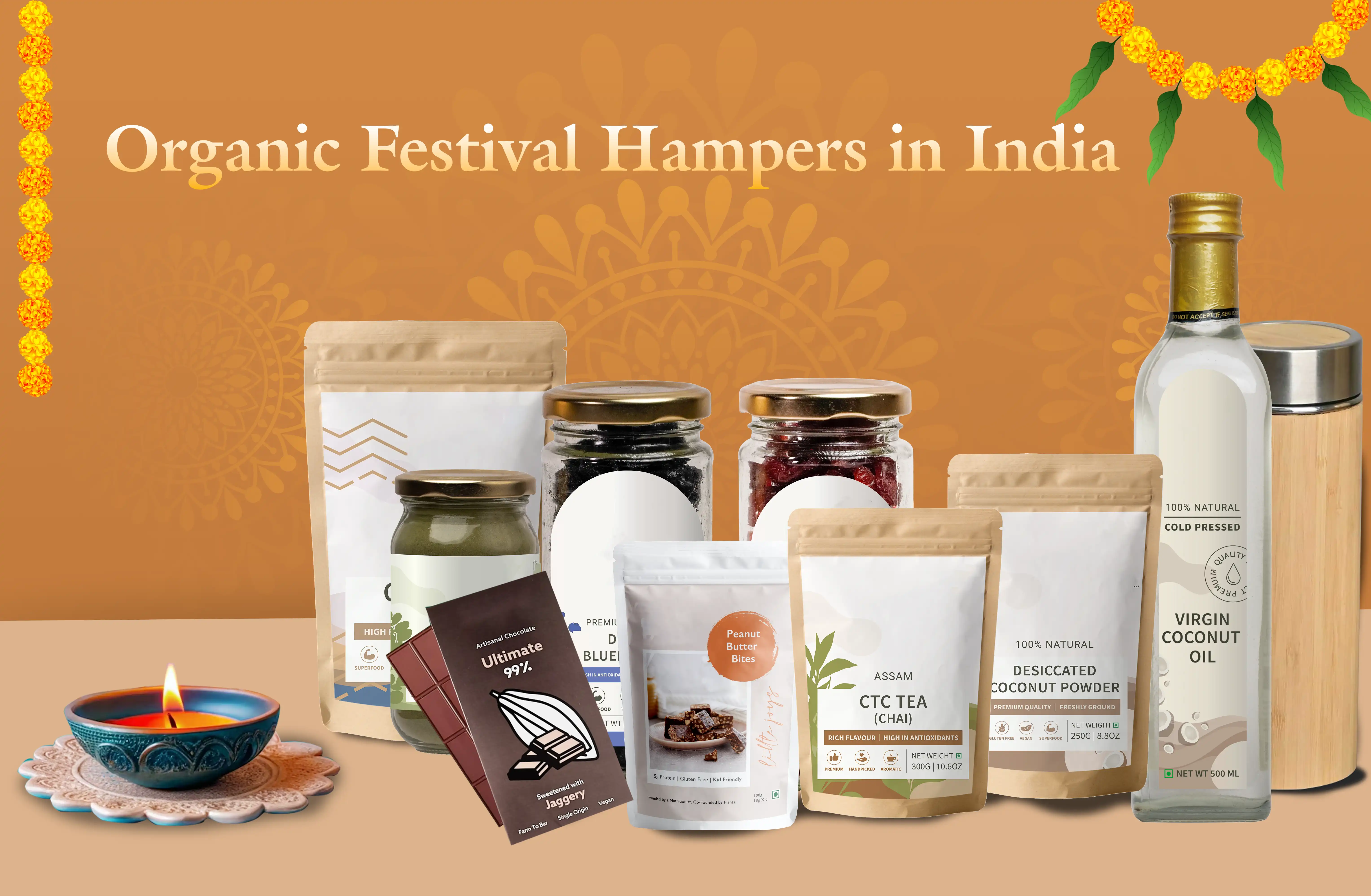
Most festival hampers in India look organic. The packaging says so. The ribbon is the right shade of earthy brown. What's inside — refined sugar sweets, heat-processed oils, artificially flavoured snacks — is identical to what you'd find in any supermarket aisle. If you want something genuinely different this festival season, PureStora's certified organic food products are verified for certification before being listed — not after a complaint.
Quick Answer: A genuine organic festival hamper contains products that individually carry FSSAI Organic or India Organic (Jaivik Bharat) certification on their packaging — not just on the outer box. The price for a genuinely certified hamper starts at ₹800 for a basic set and goes up to ₹6,000 for a premium curated one. Anything below ₹800 claiming to be fully organic deserves scrutiny on the certifications inside.
Why Most "Organic" Festival Hampers Aren't
The word "organic" has no legal protection in India unless it is backed by certification. Any brand can print it on a box. The only marks that carry verified weight are FSSAI Organic and India Organic — both government-backed, both requiring third-party audits before a product can carry the mark. According to FSSAI's organic food standards, terms like "natural," "herbal," "pure," and "farm-fresh" are unregulated. They mean nothing verifiable.
Walk through any gift store before Diwali and you'll find hampers using all four of those terms. None of them require proof. What to look for instead: the India Organic logo (issued under APEDA's National Programme for Organic Production) or the FSSAI Organic mark — on each individual product inside the hamper, not just on the outer packaging.
This is what greenwashing looks like in practice. At PureStora, every vendor submits certification documentation before any product is listed — which is why the verification process takes longer than simply accepting a seller's claim.
1. Health-Focused Organic Food Hampers
The most practical category and the easiest to verify — food certifications are clearly marked on packaging if they exist at all.
What a well-built health hamper contains:
- Organic dry fruits — almonds, cashews, walnuts, raisins. Look for the India Organic mark. One thing worth knowing: sulphur-treated dry fruits have an unnaturally bright colour. Certified organic ones are slightly duller — that dullness is the sign you want.
- Cold-pressed oils — coconut, sesame, or groundnut. Cold-pressed means the oil was not heat-processed, so its nutritional value is preserved. Check for both cold-pressed and organic certification on the label.
- Raw unfiltered honey — not just "organic honey." Raw and unfiltered means it was not heat-treated, which destroys natural enzymes. Verify the FSSAI licence number at minimum.
- Organic herbal teas — tulsi, chamomile, or ginger from a certified producer.
- Organic jaggery or date syrup — a genuinely clean alternative to refined sugar.
What to leave out:
- Any product labelled "natural" without a certification mark on the individual packet.
- Refined sugar-based mithai regardless of how artisan the packaging looks.
- Products with "added flavour" anywhere in the ingredient list.
2. Ayurvedic Wellness Hampers
Ayurvedic gifting has moved from niche to mainstream — and the claims have followed. The filter is the same as always: certification first, claim second.
What works well in an Ayurvedic hamper:
- Organic ashwagandha root powder — research suggests it may support the body's stress response and energy levels. Look for FSSAI Organic certification and a clear dosage note on the label. Not a treatment — a daily nutritional supplement.
- Organic moringa leaf powder — rich in iron, calcium, and vitamin C. Useful as a daily nutritional addition. Genuinely nutrient-dense, not a medicine.
- Organic tulsi — one of India's most studied plants. Available as capsules, loose leaf tea, or powder from certified producers.
- Organic turmeric with black pepper — research published on NCBI indicates piperine significantly improves curcumin absorption from turmeric. Always combine them.
One rule that cannot be ignored: any product description claiming an ingredient "cures," "treats," or "prevents" a condition is making an illegal health claim under FSSAI regulations. The ingredients above support general wellbeing — that is all that can be said, and it is enough.
PureStora stocks certified organic ashwagandha from audited vendors — a strong anchor product for a wellness-focused hamper.
3. Gourmet Organic Food Baskets
For people who cook and appreciate quality. The goal is items they would not buy themselves — premium, certified, and genuinely different from what a regular kirana store carries.
What makes a good gourmet hamper:
- Single-origin organic spices — turmeric from Erode, Kashmiri chilli, hand-pounded black pepper. Single-origin means traceable from farm to pack, which is itself a trust signal worth mentioning to the recipient.
- Millet-based foods — ragi, jowar, or little millet products. Organic millets are one of the fastest-growing segments in India's food market right now, driven by renewed interest in traditional grains among health-conscious families.
- Cold-pressed oils — sesame, coconut, or groundnut from a certified producer.
- Organic multigrain breakfast options — practical, everyday usable gifts that actually get finished rather than sitting on a shelf until they expire.
For a breakfast-focused hamper, millet granola with fruit and nuts is certified organic and genuinely usable every morning — not just a festival showpiece.
4. Zero-Waste and Eco-Friendly Hampers
The right choice for environmentally conscious recipients — and increasingly popular for corporate gifting where the company wants its gifts to reflect its values, not just its budget.
What to include:
- Reusable stainless steel or copper drinkware — practical, durable, zero plastic.
- Organic cotton bags or beeswax food wraps — functional replacement for single-use plastic in the kitchen.
- Natural personal care products — coconut oil-based soaps, neem toothpaste, or herbal hair oil from a certified producer.
- A small selection of organic snacks or teas alongside the reusables — so the hamper is usable immediately, not just displayed.
PureStora's natural home essentials range carries reusable and chemical-free products that pair well with certified organic food items in a hamper.
5. Personalised Organic Hampers
Personalisation does not mean expensive. It means matching the hamper to who the person actually is — not sending a generic box with a ribbon on it.
- For new parents: Chemical-free baby skincare and certified natural baby wash — PureStora has a range of toxin-free products for babies and young children that make for genuinely thoughtful gifting.
- For someone health-focused: Organic nuts, seeds, protein powder, and spirulina — a protein-rich hamper built entirely from certified whole foods.
- For someone who loves cooking: Single-origin spices, cold-pressed oils, and artisanal grains — practical gifts that get used every day rather than displayed.
- For the eco-conscious person: Reusable lifestyle products paired with certified organic personal care items — a hamper that reduces waste while being genuinely functional.
How to Verify a Hamper Before You Buy
This is the step most people skip — and why disappointing hampers keep getting gifted year after year.
- Check each product individually — FSSAI Organic or India Organic must appear on the individual product packaging. A box printed with "organic" means nothing without it on each item inside.
- Read the ingredient list — certified organic products list "organic" before each ingredient. "Made with organic ingredients" on the front label means only some ingredients qualify.
- Find the FSSAI licence number — mandatory on all packaged food sold in India. If it is missing from any food product inside the hamper, that is a red flag.
- Buy from a verified source — a curated organic marketplace checks vendor certification before listing. A generic platform does not. At PureStora, certification documentation is verified before any vendor goes live.
What to Budget for a Genuine Organic Festival Hamper
A certified organic hamper with verified products — not just attractive packaging — typically costs:
- ₹800–1,500: Basic but genuine — 2 to 3 certified products, minimal packaging.
- ₹1,500–3,000: Solid mid-range — 4 to 6 certified products, reusable or kraft packaging.
- ₹3,000–6,000: Premium curated — 6 to 8 products, Ayurvedic or gourmet focus, thoughtful packaging.
Anything claiming to be "fully organic" below ₹800 deserves scrutiny on the certifications. Certified organic products carry a real cost premium over conventional — that premium must show up somewhere in the price.
Frequently Asked Questions
What should a genuine organic festival hamper in India contain?
Every product inside must individually carry FSSAI Organic or India Organic certification — not just the outer box. A well-rounded hamper includes certified dry fruits, cold-pressed oils, organic herbal teas, and a natural sweetener like raw honey or jaggery. The certification mark on the individual product is the only reliable signal — the box design means nothing without it.
How do I know if an organic festival hamper is genuinely certified and not greenwashing?
Look for the FSSAI Organic or Jaivik Bharat (India Organic) mark on every individual product inside. Check for FSSAI licence numbers on all food items. "Natural," "herbal," and "chemical-free" are unregulated terms in India — any brand can use them without proof. Only third-party certified marks carry verified weight. You can browse certified organic personal care products to see what genuine certification looks like on a label.
Are organic festival hampers more expensive than regular hampers?
Yes — certified organic products carry a real cost premium because of the certification, farming practices, and supply chain involved. A genuine organic hamper starts at around ₹800 for a basic set. That said, the price gap between organic and conventional gifting has narrowed as more certified producers enter the Indian market.
What is the difference between "natural" and "organic" on Indian product labels?
"Natural" has no regulatory definition under FSSAI. Any brand can use it freely without certification or proof. "Organic" — when backed by FSSAI Organic or India Organic certification — is a verified claim that requires third-party auditing. When buying a festival hamper, ignore "natural" on the label entirely. Look only for the certification mark.
Conclusion
The single most important thing to check in any organic festival hamper is the certification mark on each individual product inside — not the language on the outer box. That one check separates a genuine hamper from greenwashing with good packaging. For more on making sense of organic labels and pricing in India, our post on whether organic food is worth the price in India covers the full picture.
Disclaimer: This article is for general informational purposes only. Product certifications should be verified on individual packaging before purchase. Ingredient descriptions are based on general research and are not a substitute for medical or nutritional advice.